Exhibition: The Greek Vlachs
The Museum of Folklore and Ethnology of Macedonia - Thrace, in cooperation with the Museum of the City of Belgrade, invites you to a special exhibition
The exhibition “The Greek Vlachs (Cincars) in Serbian Regions during the 18th and 19th Centuries: Working for the Benefit of their Homeland and New Country” is a must-see historical review.
From the 18th century onwards, Greek Vlachs from Northern Greece (Macedonia and Epirus) moved from their metropolitan centers to settle in Serbia and the then-existing Austro-Hungarian Empire, working as transporters (kirajis/kiradjis), merchants, and teachers. Together with other Greeks, they established communities, schools, and churches, and later distinguished themselves as influential merchants and scholars.
Particularly in the Serbian regions, they founded communities, Greek schools, and Orthodox churches. In Belgrade, their presence did not go unnoticed, especially in Serbian literature and historiography, as evidenced by the works of Stevan Sremac and Dušan Popović. These authors meticulously portray the mercantile genius of the Cincars, highlighting their role as essential carriers and ambassadors of Greek culture and the Greek Orthodox tradition in the Ottoman Balkans and the then-existing Austro-Hungarian Empire.
Where
The Residence of Princess Ljubica is one of few buildings surviving from the first reign of Prince Milosh Obrenovic. It was built between 1829 and 1831 according to the project and under the superv...
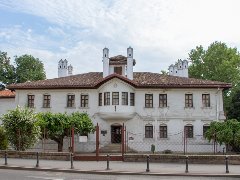
The Residence of Princess Ljubica
The Residence of Princess Ljubica is one of few buildings surviving from the first reign of Prince Milosh Obrenovic. It was built between 1829 and 1831 according to the project and under the superv...